










“Pacu” in Indonesian, but more precisely, Minangkabau language means “racing” while “Jawi” means “bull”.
Padang is located in Indonesia, west of Sumatra Island. Every year after the rice harvest, the villagers hold a series of festivals, among which the PacuJawi is the most exciting and popular. The history of bull racing dates back hundreds of years and is a much-anticipated entertainment for the simple villagers.
The race is held four times a year in four districts, namely Paraigan, Rambatan, Lima Kaum and Sungai Tarab.
After the location is decided by the chiefs, the selected district council will deploy everything to welcome the participants from each district.
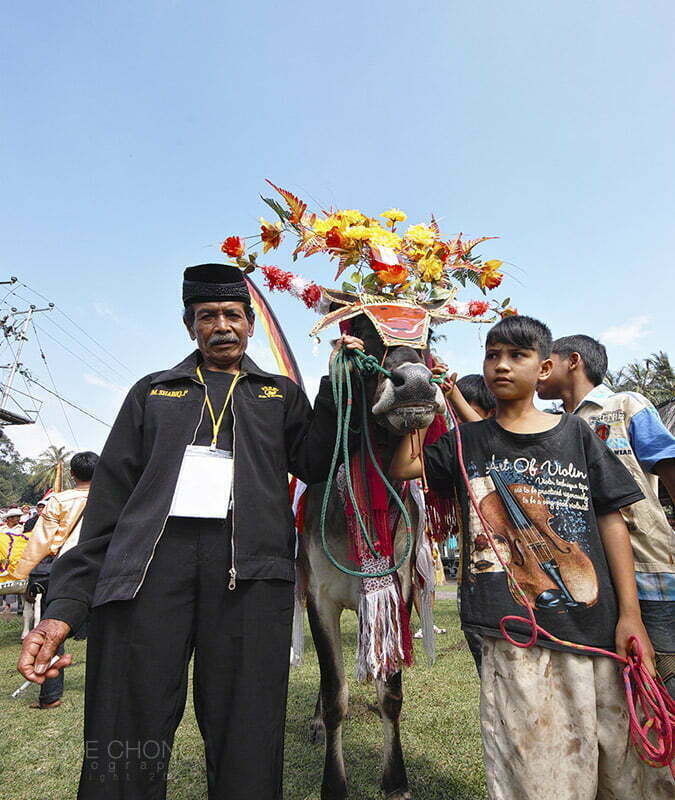
On the day of the competition, the cows are dressed up, with their names on their necks, and after a worship ceremony, they are brought to the arena to prepare for the competition.
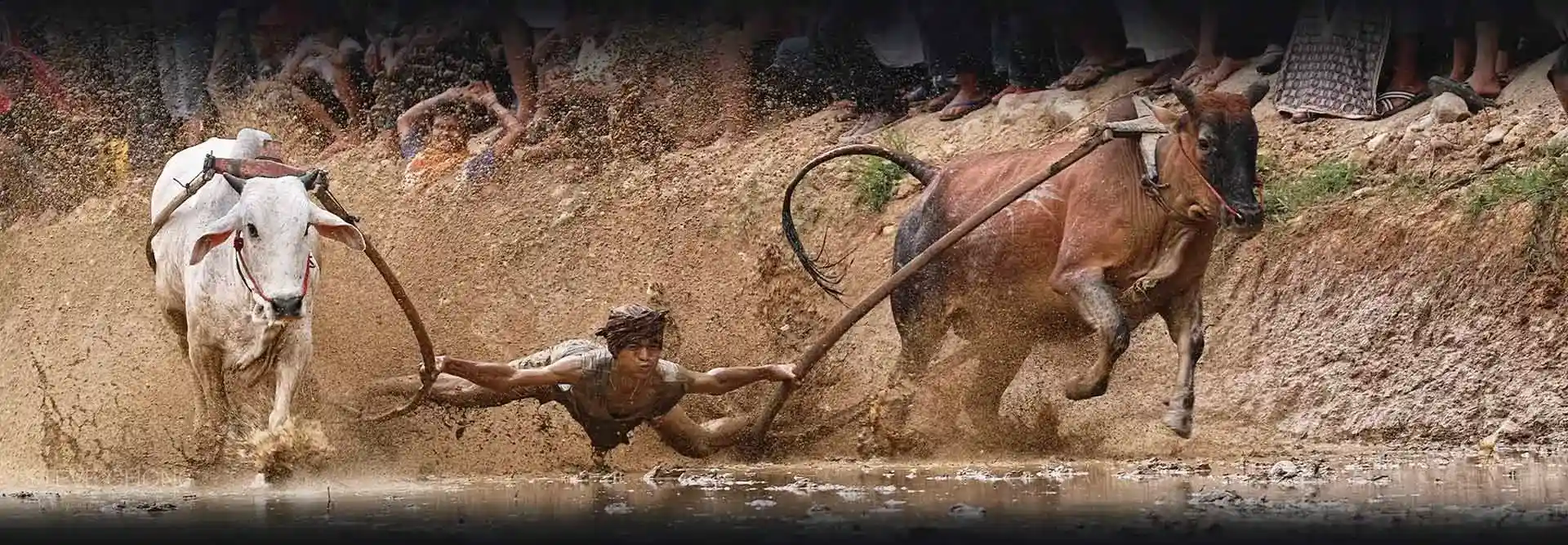
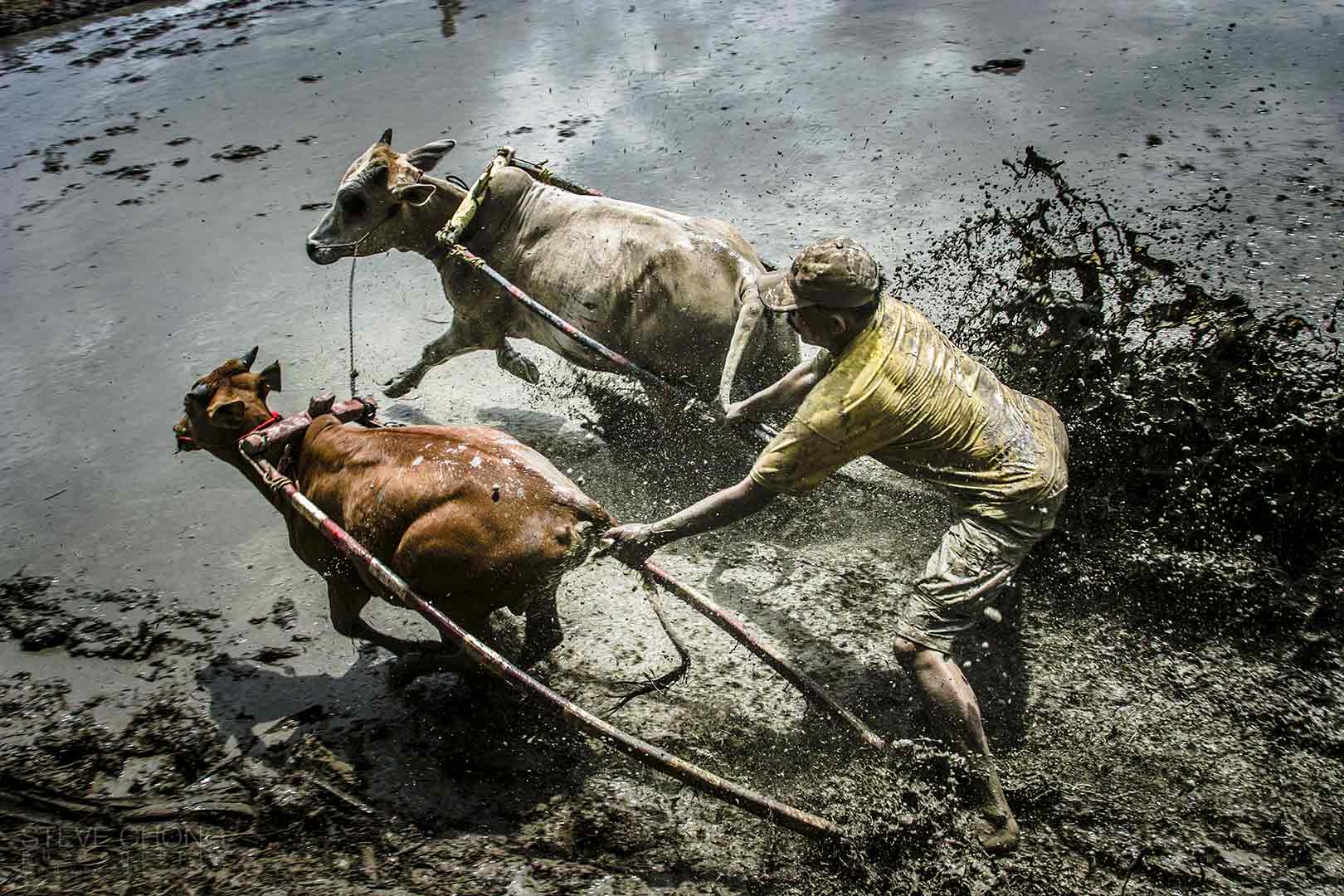
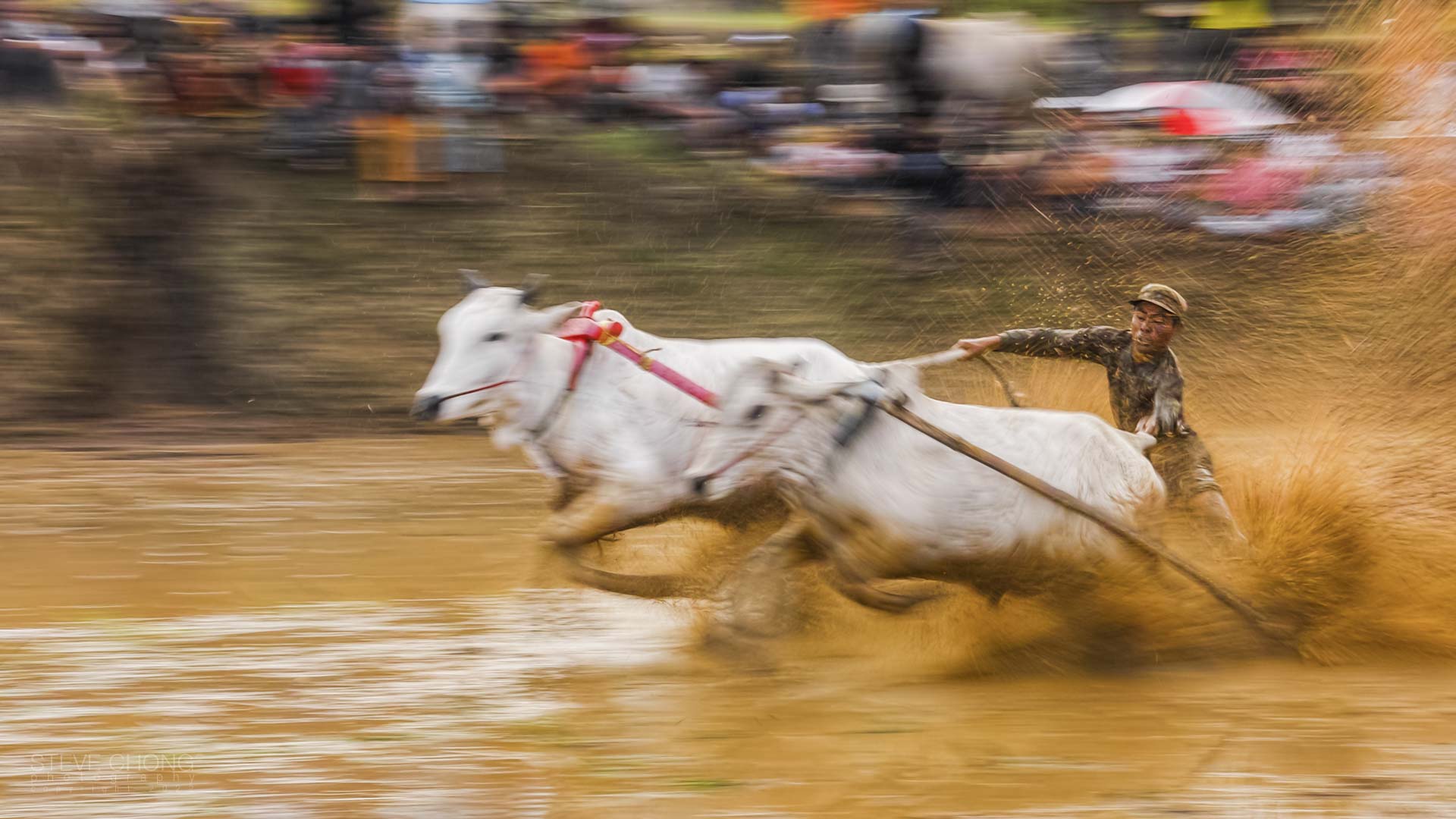
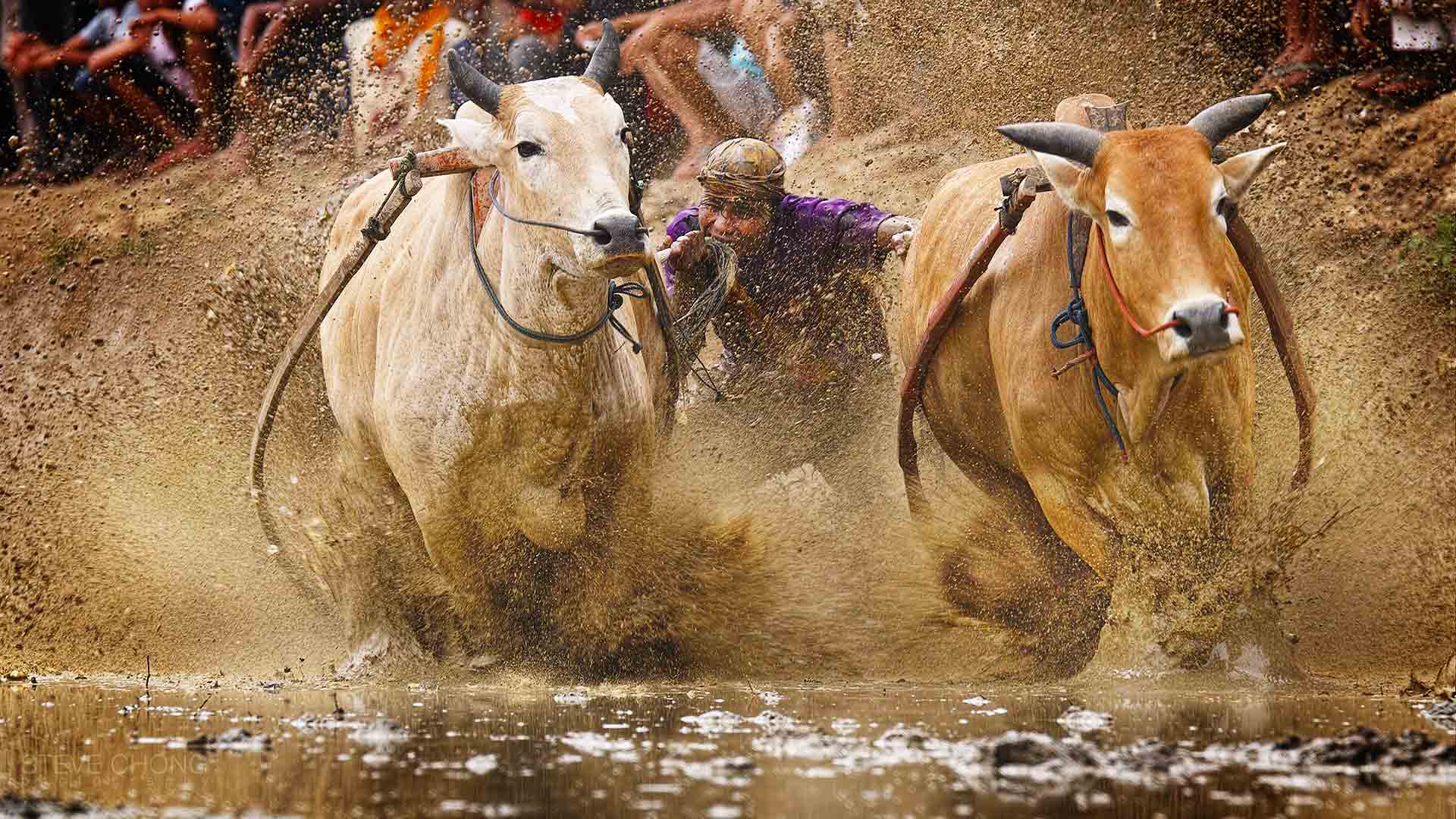
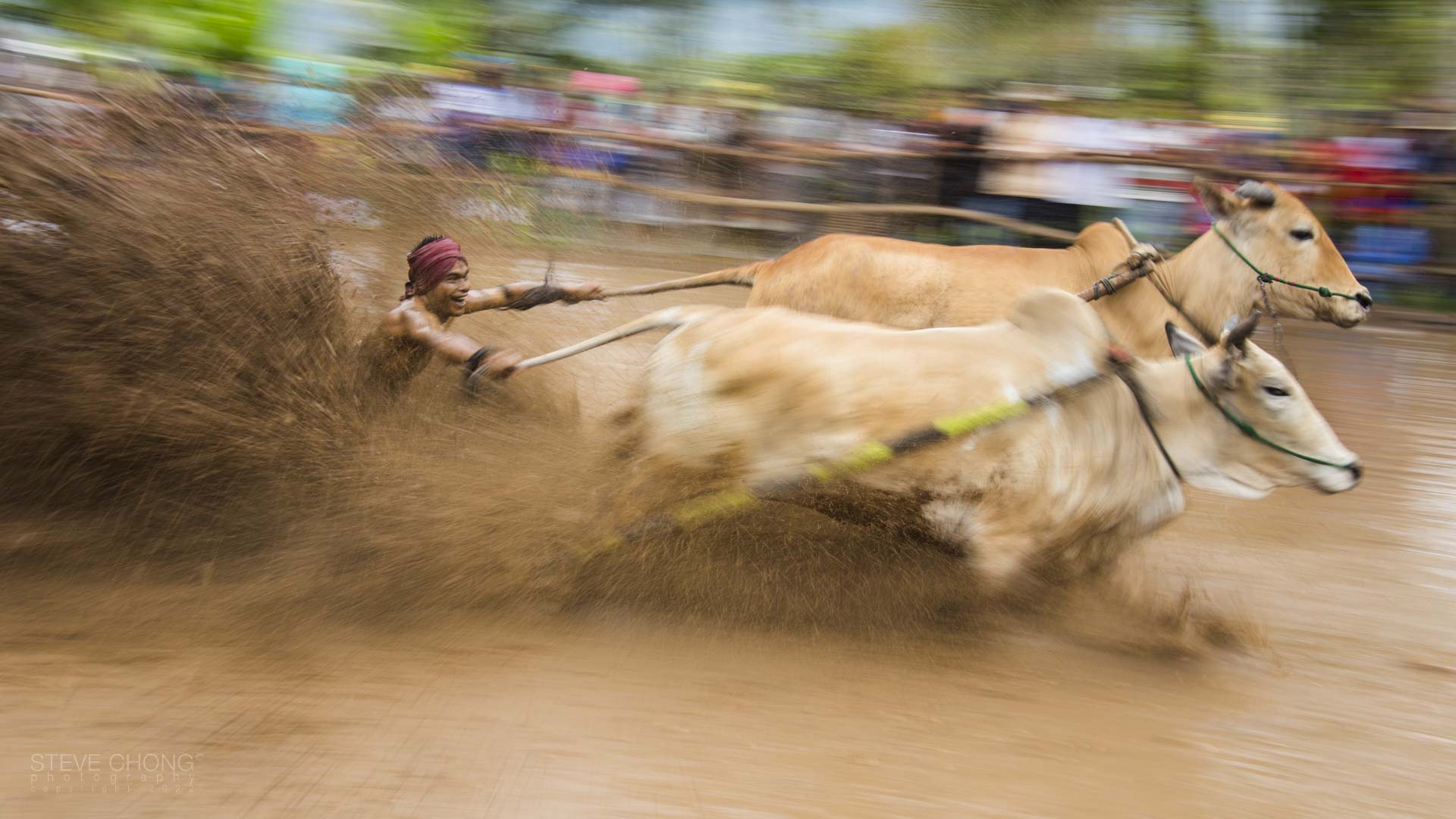
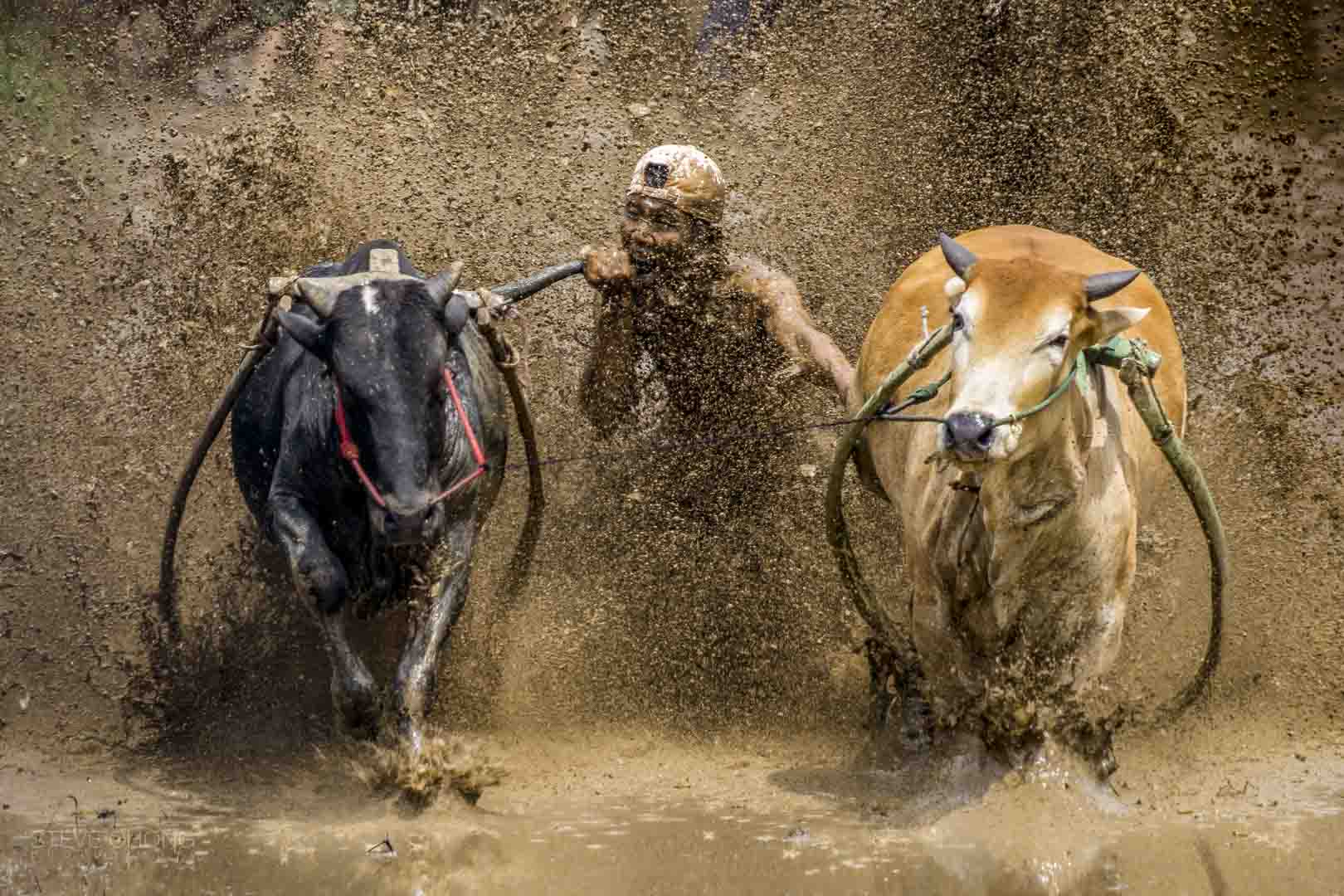
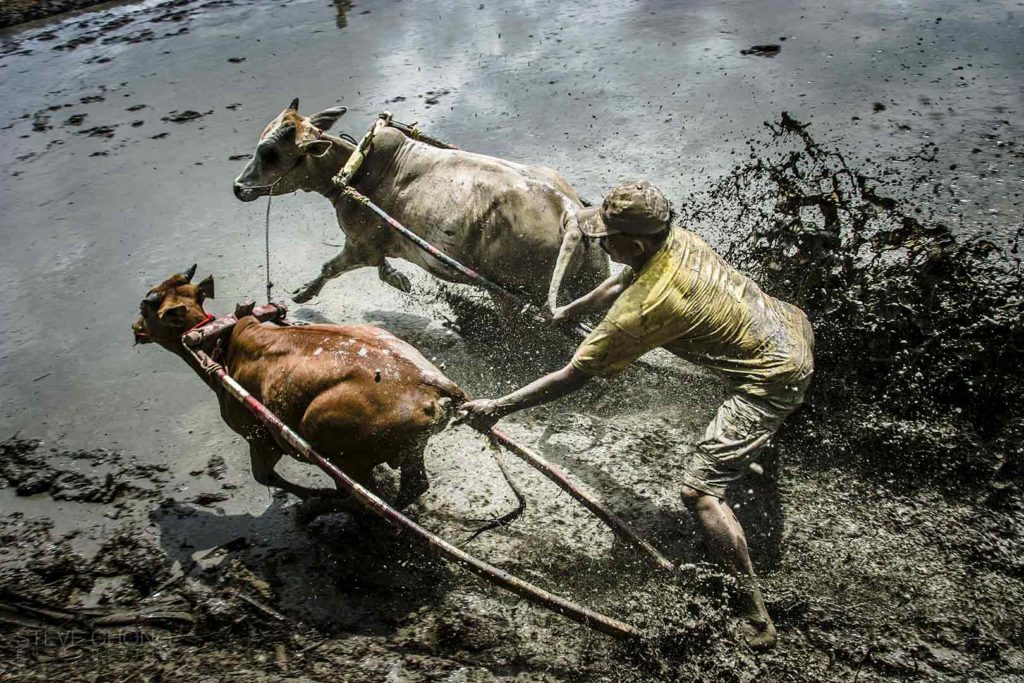
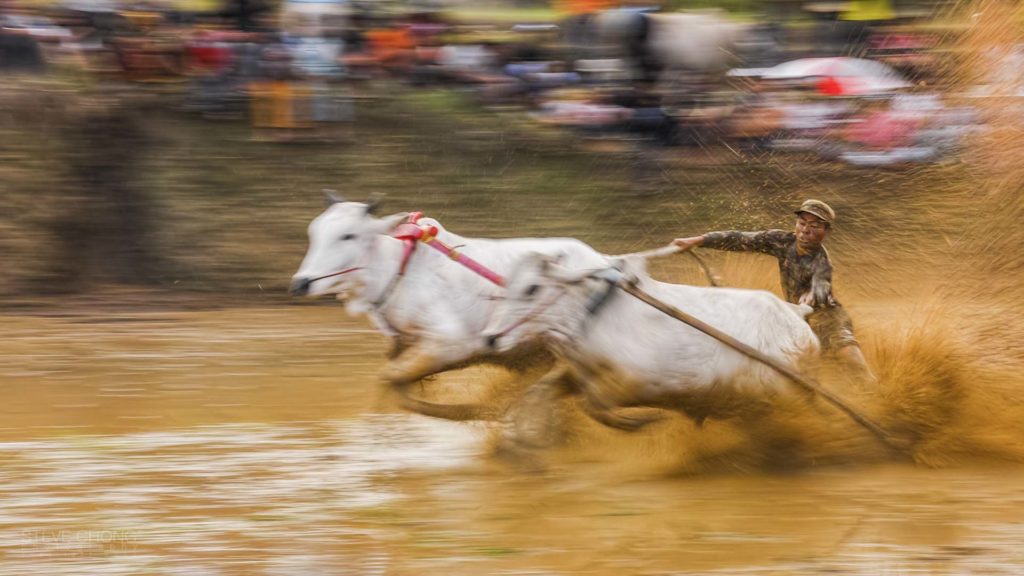
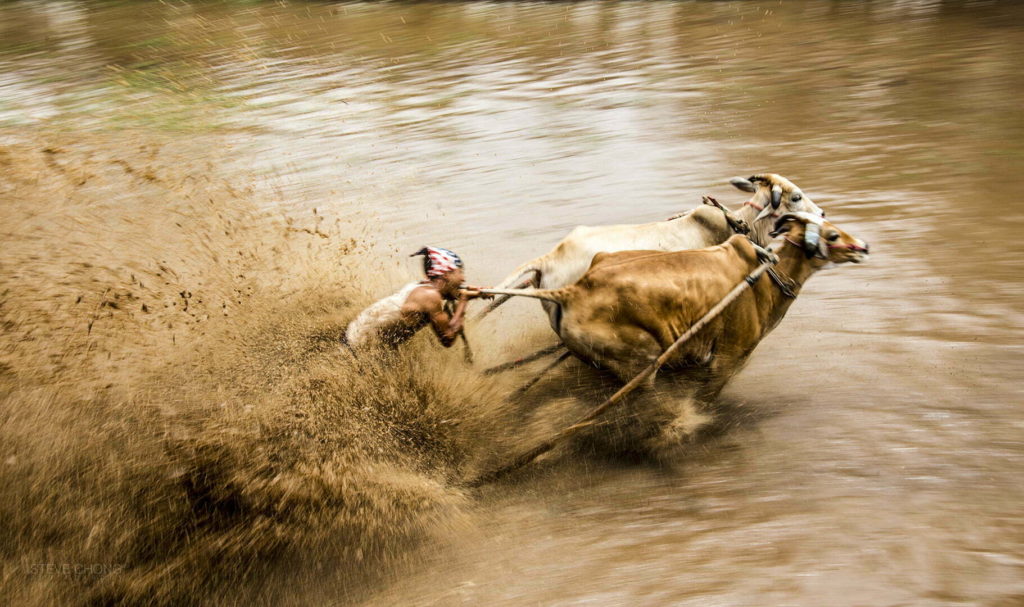
A pair of bull are led to the starting point, the farmers steady the bull, hang the plow on them, then tie the two plows with a rope, the rider then steps on the plow, and when he is ready, at the rider’s call, the farmers let go of their hands and the pair of bull will dash forward as if their lives depended on it. In order to make the bulls run faster, the rider reaches out and catches the bulls by the tail, then puts it in his mouth and bites it; when the bull feels the pain, they will run faster.
Interestingly, the race is not about speed and strength. But about making sure the pair of bulls keep their balance and run parallel to the finish line, while the rider does his best to pose for the crowd. With the mud splashing around at high speed, it was not easy for the rider to balance himself on his bare feet, and it was even more challenging to strike a beautiful pose. As a result, the rider and the bulls created many exciting moments, some thrilling, some wonderful, some funny, causing the audience to laugh; it was highly entertaining.
When the event started, the villagers, young and old, in the vicinity were going to the arena, which was transformed from a rice paddy to the racing track. It was a boisterous location, with the sound of children running around, vendors, spectators, and traditional music playing over the loudspeakers; the whole event was like a carnival. It is worth mentioning that there are nearly 500 to 800 bulls competing at the peak of the race, so it is easy to imagine the lively atmosphere.
The bull race is also a time for traders and farmers to conduct business, to sell and to buy stocks. The bulls that often win the competition, their value and price go up more than twice the market price. The status of the rider and the bulls are also elevated.
Traditionally, the significance of the bull race was not only to provide entertainment for the villagers, but also to bring the residents of each prefecture together to promote social integration. In addition, merchants use the opportunity to do business, improve economic efficiency, and achieve several social development goals. More importantly, bull racing is becoming increasingly popular among domestic and foreign photographers, as well as cultural workers, and it has become a new selling point for tourism, thus promoting tourism.
Photographing bull racing is tense and exciting, especially when standing face to face with the bull; the situation is more “dangerous”. When the bull rushes towards the photographer, in an instant, you have to focus, compose and press the shutter, which is more exciting than words can describe, and you have to experience it yourself to understand. But unfortunately, sometimes there are some situations that arise from the joy of it, such as when the bull running into the crowd, and when the people panicked, running around, collisions will occur, but interestingly, after that, the audience will get together again and continue to watch the race. There were many occasions where the photographer was knocked down by the bull, resulting in injuries. In one incident, a more serious one, the bull’s horn pieced through photographer’s belly, and killed the photographer. But thankfully, such incidents rarely happen anymore. The authority had setup the safety perimeter, and the audience and photographers could not step into the perimeter.
Interestingly, in order to get a good angle, like the saying goes “take the bull by its horn”; the photographer is still willing to take the risks.
Minangkabau
Padang is also the birthplace of Minangkabau, where the Minangkabau are the main ethnic group. “Minang” means “victory” in Malay and “Kabau” means buffalo.
Minangkabau is a matrilineal society, which means that in a family, the mother or grandmother is in charge of many things. To this day, many families in Padang still follow this system.
There is a very interesting history about the name Minangkabau.
According to legend, this is a place where the Javanese and Minangkabau fought over the land, but after some deliberation between the two, they came up with a different way to settle the dispute. Unlike the usual sword-fighting war, they decided to use two buffalos to fight each other, whose bull wins, will have the rights to own over the land.
The Javanese chose a very strong buffalo, and the Minangkabau chose a young unweaned buffalo. On the eve of the competition, Minangkabau starved the young buffalo for a few days and then tied two very sharp knives to its horns.
When the two buffaloes met, the little buffalo was so hungry that it thought the big buffalo had milk to quench its hunger, and it immediately lunged forward and stabbed the sharp knives into the big buffalo’s stomach, killing the big buffalo.
The victory went to the wise strategy of the Minangkabau people.
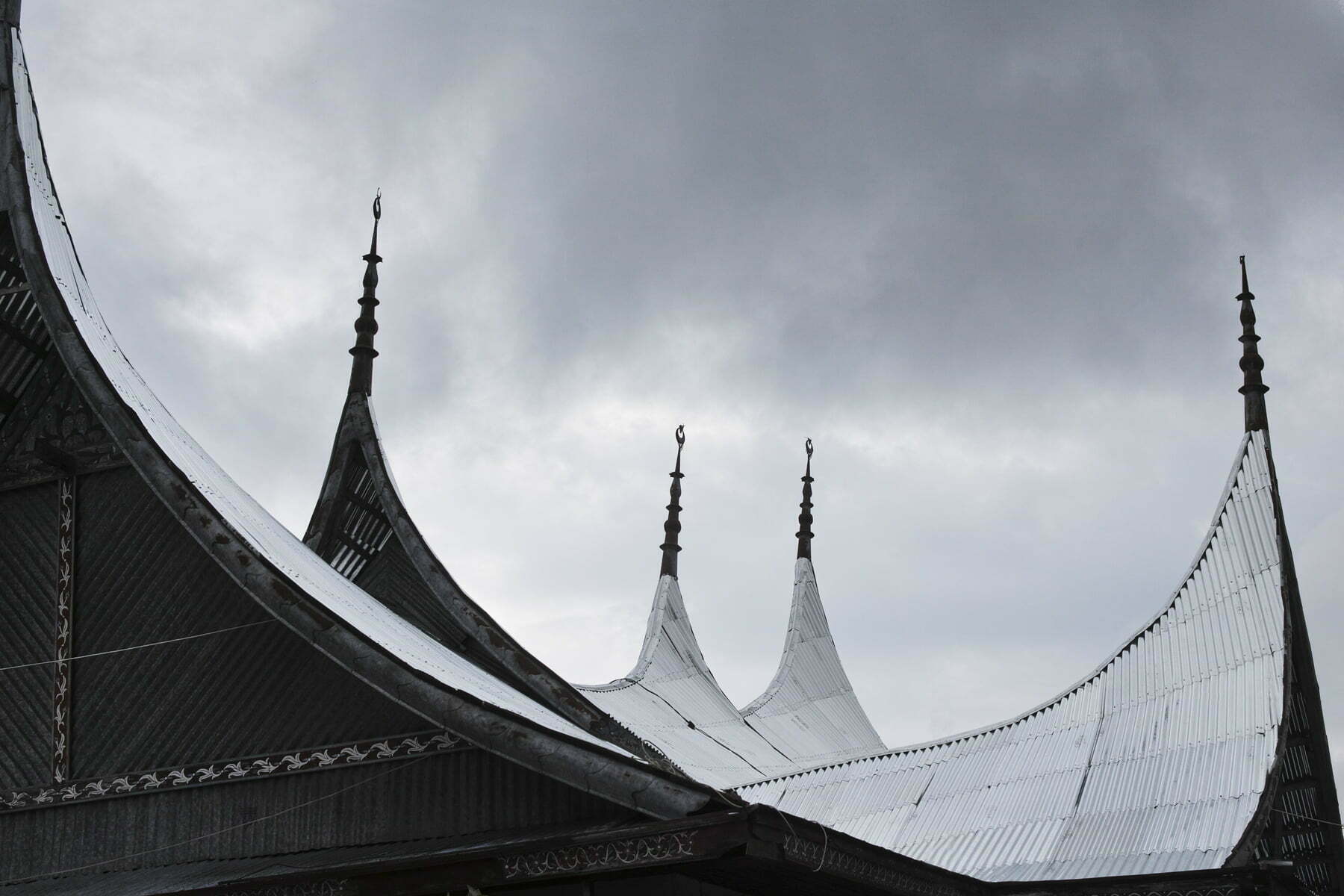
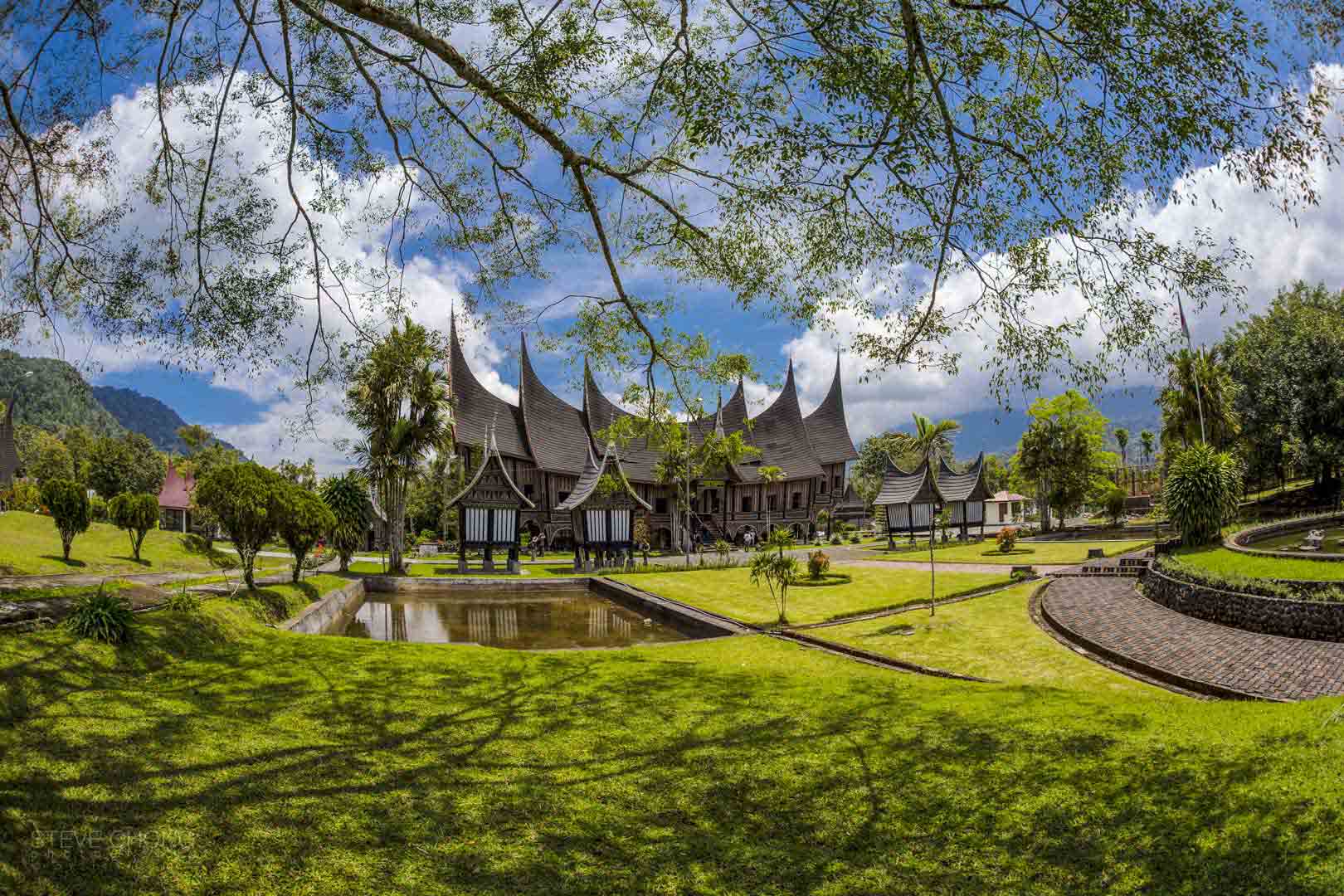
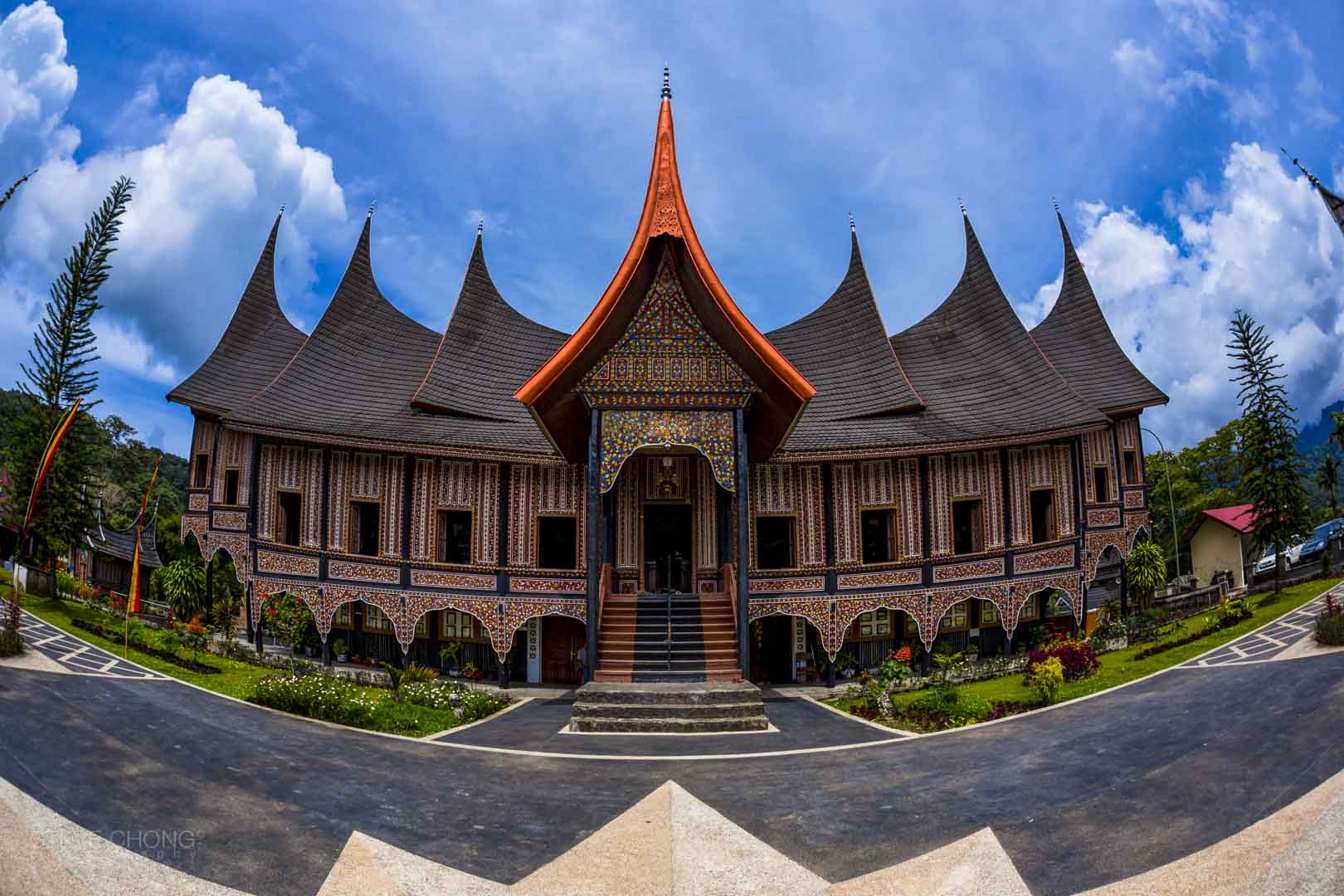
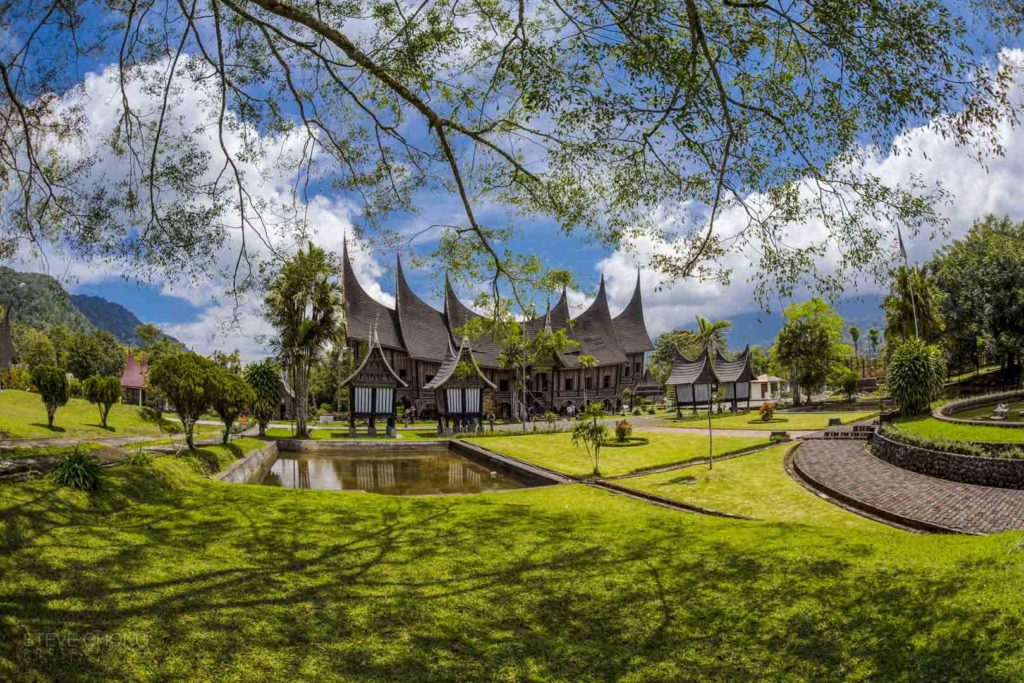
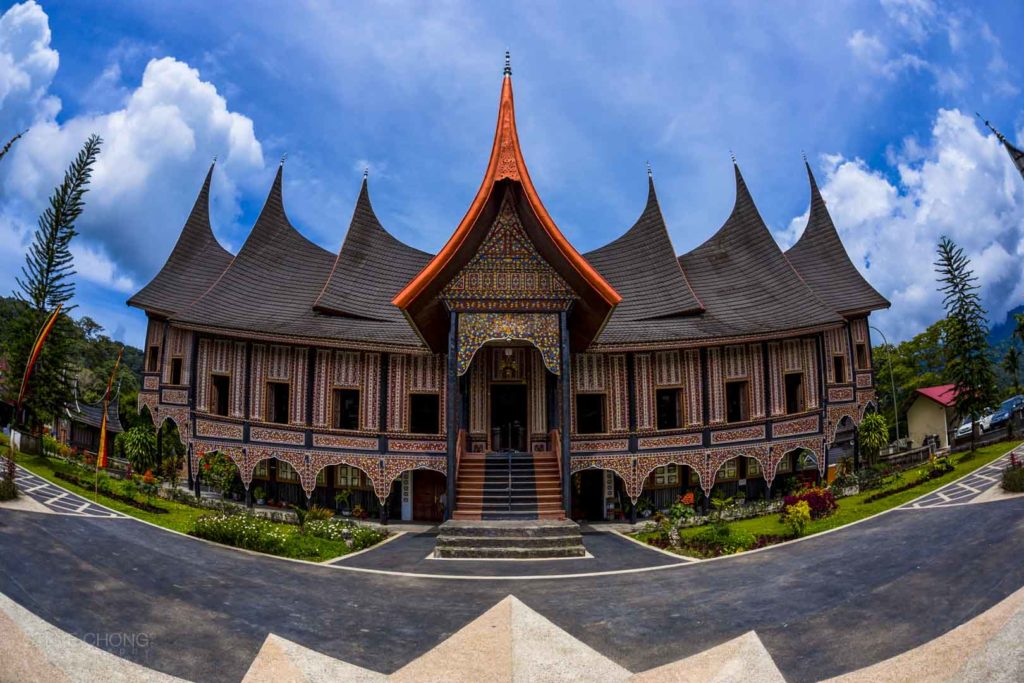
This legend is still popular today and has had a profound impact on the culture of Minangkabau, whose roofs are built like the sharp horns of a buffalo; hence the allusion.